Oncology in Senior Animals with Clinical Cases
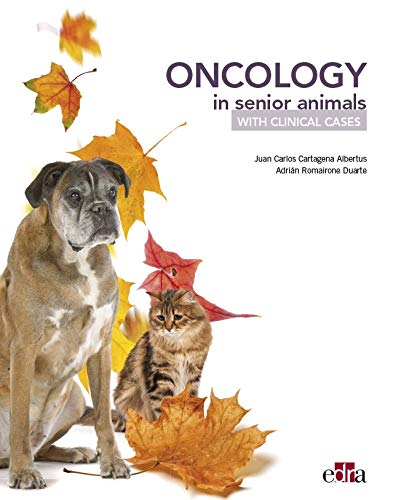
De: Juan Carlos Cartagena Albertus, Adrián Romairone Duarte
ISBN: 9788417640705
2019, Edra
Capa dura
Páginas: 160
De: Juan Carlos Cartagena Albertus, Adrián Romairone Duarte
ISBN: 9788417640705
2019, Edra
Capa dura
Páginas: 160
The book Oncology in senior animals shows the neoplasms most commonly diagnosed in animals in the senior age range and describes their most common clinical signs, diagnostic approach, prognosis and treatment. It includes clinical cases.
1. General aspects of senior oncology
General aspects of senior oncology
Oncology in senior animals
Introduction
What are the clinical effects of age?
Are senior patients more likely to get cancer because of their age?
Treating the senior patient
The oncology visit
Paraneoplastic syndromes
Introduction
Causes and origin of paraneoplastic syndromes
Paraneoplastic syndromes and early diagnosis in oncology
Paraneoplastic syndromes by body system
Miscellaneous manifestations
2. Most common neoplasms in senior oncology
Cutaneous tumours
Introduction
Prevalence of cutaneous tumours
Aetiology
Assessing a cutaneous tumour
Cytology
Biopsy
Staging
Most common cutaneous tumours
Squamous cell carcinoma
Mast cell tumour
Cutaneous melanoma
Cutaneous lymphoma
Histiocytoma
Cutaneous plasmacytoma
Fibrovascular papillomas
Basal cell carcinoma
Hepatoid adenoma
Injection-site sarcoma
Digestive tumours in senior patients
Oral tumours
Introduction
Classification
Oral melanoma
Squamous cell carcinoma
Fibrosarcoma
Epulides
Gastrointestinal tumours
General clinical signs
Gastrointestinal tumours in dogs
Gastrointestinal tumours in cats
Eyelid and orbital tumours
Introduction
Nuclear sclerosis
Iris atrophy
Eyelid tumours in senior dogs and cats
Meibomian gland adenomas and adenocarcinomas
Melanomas
Histiocytomas
Mast cell tumours
Hidrocystoma
Peripheral nerve sheath tumours
Squamous cell carcinoma
Basal cell carcinoma
Fibrosarcomas
Orbital tumours in senior dogs and cats
Introduction to orbital disorders
Introduction to orbital tumours
Orbital tumours in cats
Musculoskeletal tumours in senior patients
Osteosarcoma
Tumour presentation and behaviour
Clinical signs
Aetiology
Diagnosis
Treatment
Clinical course and prognosis in canine and feline osteosarcoma
Soft tissue sarcomas
Introduction
Injection-site sarcoma in cats
Haemolymphatic system tumours in senior patients
Introduction
Canine lymphoma
Introduction
Epidemiology
Clinical presentation
Diagnosis
Treatment
Leukaemia
Classification
Malignant lymphoproliferative disorders
Myeloproliferative diseases
Myelodysplastic syndromes
How to identify leukaemia
Treating leukaemia
Feline leukaemia
3. Common clinical cases in senior oncology
Common clinical cases in senior oncology
Anaemia due to hyperoestrogenism caused by a tumour
Clinical history
Clinical examination
Diagnostic tests
Treatment
Theoretical aspects
Squamous cell carcinoma in senior cats
Introduction
Clinical examination
Diagnostic tests and definitive diagnosis
Medical and surgical treatment
Clinical course
Theoretical aspects
Vaginal polyps in senior patients
Introduction
Clinical history
Clinical examination
Diagnostic tests
Treatment options
Theoretical aspects
Oral canine melanoma
Clinical history
Surgical treatment
Immunotherapy
Eyelid mast cell tumour in a cat
Clinical history
Clinical examination
Diagnostic tests
Diagnosis
Treatment
Clinical course
Theoretical aspects
Nasal lymphoma in a cat
Clinical history
Clinical examination
Diagnostic tests
Diagnosis
Treatment
Prognosis
Theoretical aspects
Mediastinal lymphoma in a cat
Clinical history
Clinical examination
Diagnostic tests
Treatment
Theoretical aspects
References
|
Juan Carlos Cartagena Albertus Juan Carlos Cartagena Albertus graduated from the University of Zaragoza in 1987. He is a member of the Royal College of Veterinary Surgeons (RCVS), holds a Master of Science (MSc), is certified in oncology and soft tissue surgery with the Spanish Small Animal Veterinary Association (AVEPA), holds a University Master in Veterinary Practice & Therapeutic Investigation, a General Practitioner Certificate (GP Cert.) in Ophthalmology, a Postgraduate Certificate in Advanced Veterinary Practice (PgC Cert. AVP) from the Royal College of Veterinary Surgeons, and earned recognition as a university specialist in endoscopy and minimally invasive surgery from the University of Extremadura (Spain). He is also a member of the European Society of Veterinary Oncology (ESVONC) and the AVEPA Oncology and Soft Tissue Surgery working groups. He works at Broadway Veterinary Hospital in Peterborough, Cambridgeshire (UK). |
|
Adrián Romairone Duarte Adrián Romairone Duarte graduated in veterinary medicine in 1987 from the General Pico Faculty of Veterinary Sciences at the National University of La Pampa in Argentina. His degree was recognized as equivalent to the Spanish Degree in Veterinary Medicine by the Spanish Ministry of Education and Sciences in 1990. He holds a diploma in advanced studies from the University of León (2007) and obtained his PhD from the same university in 2016. He has worked as a clinical veterinary surgeon since 1987. He is the owner of Centro de Diagnóstico Veterinario, a clinic that specialises in the diagnosis of pets and birds of prey. He is also the owner and editor of the website www.diagnosticoveterinario.com. His areas of interest include clinical oncology, diagnostic cytology, oncologic, trauma, and soft tissue surgery, and medical and surgical pathology applied to birds of prey in the wild and captivity (e.g., birds of falconry). He is particularly interested in necropsy as a tool for diagnosing common diseases in birds of prey and in forensic investigations of anthropogenic causes of death in these animals. |