Animais de Produção e Saúde Pública
Genomic Selection in Animals
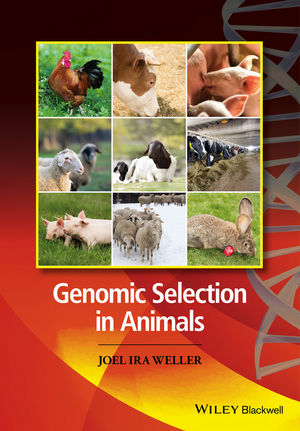
De: Joel Weller
ISBN: 9780470960073
2016, Wiley
Capa dura
Páginas: 192
Animais de Produção e Saúde Pública
De: Joel Weller
ISBN: 9780470960073
2016, Wiley
Capa dura
Páginas: 192
The field of whole genome selection has quickly developed into the breeding methodology of the future. As efforts to map a wide variety of animal genomes have matured and full animal genomes are now available for many animal scientists and breeders are looking to apply these techniques to livestock production.
Providing a comprehensive, forward-looking review of animal genomics, Genomic Selection in Animals provides coverage of genomic selection in a variety of economically important species including cattle, swine, and poultry. The historical foundations of genomic selection are followed by chapters that review and assess current techniques. The final chapter looks toward the future and what lies ahead for field as application of genomic selection becomes more widespread.
A concise, useful summary of the field by one of the world’s leading researchers, Genomic Selection in Animals fills an important gap in the literature of animal breeding and genomics.
Preface: Welcome to the “Promised Land” xiii
Chapter 1 Historical Overview 1
Introduction 1
The Mendelian Theory of Genetics 1
The Mendelian Basis of Quantitative Variation 2
Detection of QTL with Morphological and Biochemical Markers 2
DNA-Level Markers, 1974–1994 3
DNA-Level Markers Since 1995: SNPs and CNV 4
QTL Detection Prior to Genomic Selection 4
MAS Prior to Genomic Selection 5
Summary 6
Chapter 2 Types of Current Genetic Markers and Genotyping Methodologies 7
Introduction 7
From Biochemical Markers to DNA]Level Markers 7
DNA Microsatellites 8
Single Nucleotide Polymorphisms 8
Copy Number Variation 9
Complete Genome Sequencing 9
Summary 10
Chapter 3 Advanced Animal Breeding Programs Prior to Genomic Selection 11
Introduction 11
Within a Breed Selection: Basic Principles and Equations 11
Traditional Selection Schemes for Dairy Cattle 12
Crossbreeding Schemes: Advantages and Disadvantages 14
Summary 15
Chapter 4 Economic Evaluation of Genetic Breeding Programs 17
Introduction 17
National Economy versus Competition among Breeders 17
Criteria for Economic Evaluation: Profit Horizon, Interest Rate, and Return on Investment 18
Summary 20
Chapter 5 Least Squares, Maximum Likelihood, and Bayesian Parameter Estimation 21
Introduction 21
Least Squares Parameter Estimation 21
ML Estimation for a Single Parameter 22
ML Multiparameter Estimation 24
Methods to Maximize Likelihood Functions 26
Confidence Intervals and Hypothesis Testing for MLE 26
Bayesian Estimation 27
Parameter Estimation via the Gibbs Sampler 28
Summary 29
Chapter 6 Trait-Based Genetic Evaluation: The Mixed Model 31
Introduction 31
Principles of Selection Index 31
The Mixed Linear Model 34
The Mixed Model Equations 34
Solving the Mixed Model Equations 35
Important Properties of Mixed Model Solutions 36
Multivariate Mixed Model Analysis 37
The Individual Animal Model 38
Yield Deviations and Daughter Yield Deviations 39
Analysis of DYD as the Dependent Variable 40
Summary 41
Chapter 7 Maximum Likelihood and Bayesian Estimation of QTL Parameters with Random Effects Included in the Model 43
Introduction 43
Maximum Likelihood Estimation of QTL Effects with Random Effects Included in the Model, the Daughter Design 43
The Granddaughter Design 45
Determination of Prior Distributions of the QTL Parameters for the Granddaughter Design 46
Formula for Bayesian Estimation and Tests of Significance of a Segregating QTL in a Granddaughter Design 49
Summary 50
Chapter 8 Maximum Likelihood, Restricted Maximum Likelihood, and Bayesian Estimation for Mixed Models 51
Introduction 51
Derivation of Solutions to the Mixed Model Equations by Maximum Likelihood 51
Estimation of the Mixed Model Variance Components 52
Maximum Likelihood Estimation of Variance Components 52
Restricted Maximum Likelihood Estimation of Variance Components 54
Estimation of Variance Components via the Gibbs Sampler 55
Summary 58
Chapter 9 Distribution of Genetic Effects, Theory, and Results 59
Introduction 59
Modeling the Polygenic Variance 59
The Effective Number of QTL 61
The Case of the Missing Heritability 61
Methods for Determination of Causative Mutations for QTL in Animals and Humans 62
Determination of QTN in Dairy Cattle 63
Estimating the Number of Segregating QTL Based on Linkage Mapping Studies 64
Results of Genome Scans of Dairy Cattle by Granddaughter Designs 65
Results of Genome]Wide Association Studies in Dairy Cattle by SNP Chips 66
Summary 66
Chapter 10 The Multiple Comparison Problem 69
Introduction 69
Multiple Markers and Whole Genome Scans 69
QTL Detection by Permutation Tests 71
QTL Detection Based on the False Discovery Rate 71
A Priori Determination of the Proportion of False Positives 74
Biases with Estimation of Multiple QTL 75
Bayesian Estimation of QTL from Whole Genome Scans: Theory 76
Bayes A and Bayes B Models 77
Bayesian Estimation of QTL from Whole Genome Scans: Simulation Results 79
Summary 80
Chapter 11 Linkage Mapping of QTL 81
Introduction 81
Interval Mapping by Nonlinear Regression: The Backcross Design 81
Interval Mapping for Daughter and Granddaughter Designs 83
Computation of Confidence Intervals 84
Simulation Studies of CIs 85
Empirical Methods to Estimate CIs, Parametric and Nonparametric Bootstrap, and Jackknife Methods 86
Summary 87
Chapter 12 Linkage Disequilibrium Mapping of QTL 89
Introduction 89
Estimation of Linkage Disequilibrium in Animal Populations 89
Linkage Disequilibrium QTL Mapping: Basic Principles 90
Joint Linkage and Linkage Disequilibrium Mapping 92
Multitrait and Multiple QTL LD Mapping 93
Summary 93
Chapter 13 Marker-Assisted Selection: Basic Strategies 95
Introduction 95
Situations in Which Selection Index is Inefficient 95
Potential Contribution of MAS for Selection within a Breed: General Considerations 96
Phenotypic Selection versus MAS for Individual Selection 97
MAS for Sex-Limited Traits 98
MAS Including Marker and Phenotypic Information on Relatives 99
Maximum Selection Efficiency of MAS with All QTL Known, Relative to
Trait-Based Selection, and the Reduction in RSE Due to Sampling Variance 99
Marker Information in Segregating Populations 100
Inclusion of Marker Information in “Animal Model” Genetic Evaluations 100
Predicted Genetic Gains with Genomic Estimated Breeding Values: Results of Simulation Studies 101
Summary 102
Chapter 14 Genetic Evaluation Based on Dense Marker Maps: Basic Strategies 103
Introduction 103
The Basic Steps in Genomic Evaluation 103
Evaluation of Genomic Estimated Breeding Values 104
Sources of Bias in Genomic Evaluation 104
Marker Effects Fixed or Random? 105
Individual Markers versus Haplotypes 106
Total Markers versus Usable Markers 106
Deviation of Genotype Frequencies from Their Expectations 107
Inclusion of All Markers versus Selection of Markers with Significant Effects 107
The Genomic Relationship Matrix 108
Summary 109
Chapter 15 Genetic Evaluation Based on Analysis of Genetic Evaluations or Daughter-Yield Evaluations 111
Introduction 111
Comparison of Single]Step and Multistep Models 111
Derivation and Properties of Daughter Yields and DYD 112
Computation of “Deregressed” Genetic Evaluations 113
Analysis of DYD as the Dependent Variable with All Markers Included as Random Effects 114
Computation of Reliabilities for Genomic Estimated Breeding Values 116
Bayesian Weighting of Marker Effects 116
Additional Bayesian Methods for Genomic Evaluation 117
Summary 117
Chapter 16 Genomic Evaluation Based on Analysis of Production Records 119
Introduction 119
Single-Step Methodologies: The Basic Strategy 119
Computation of the Modified Relationship Matrix when only a Fraction of the Animals are Genotyped: The Problem 120
Criteria for Valid Genetic Relationship Matrices 120
Computation of the Modified Relationship Matrix when only a Fraction of the Animals are Genotyped, the Solution 121
Solving the Mixed Model Equations without Inverting H 121
Inverting the Genomic Relationship Matrix 122
Estimation of Reliabilities for Genomic Breeding Values Derived by Single]Step Methodologies 122
Single-Step Computation of Genomic Evaluations with Unequally Weighted Marker Effects 123
Summary 124
Chapter 17 Validation of Methods for Genomic Estimated Breeding Values 125
Introduction 125
Criteria for Evaluation of Estimated Genetic Values 125
Methods Used to Validate Genomic Genetic Evaluations 126
Evaluation of Two-Step Methodology Based on Simulated Dairy Cattle Data 127
Evaluation of Multistep Methodology Based on Actual Dairy Cattle Data 127
Evaluation of Single-Step Methodologies Based on Actual Dairy Cattle Data 128
Evaluation of Single- and Multistep Methodologies Based on Actual Poultry Data 129
Evaluation of Single- and Multistep Methodologies Based on Actual Swine Data 130
Evaluation of GEBV for Plants Based on Actual Data 130
Summary 131
Chapter 18 By-Products of Genomic Analysis: Pedigree Validation and Determination 133
Introduction 133
The Effects of Incorrect Parentage Identification on Breeding Programs 133
Principles of Parentage Verification and Identification with Genetic Markers 134
Paternity Validation Prior to High]Density SNP Chips 135
Paternity Validation and Determination with SNP Chips 135
Validation of More Distant Relationships 136
Pedigree Reconstruction with High]Density Genetic Markers 137
Summary 137
Chapter 19 Imputation of Missing Genotypes: Methodologies, Accuracies, and Effects on Genomic Evaluations 139
Introduction 139
Determination of Haplotypes for Imputation 139
Imputation in Humans versus Imputation in Farm Animals 140
Algorithms Proposed for Imputation in Human and Animal Populations 141
Comparisons of Accuracy and Speed of Imputation Methods 142
Effect of Imputation on Genomic Genetic Evaluations 143
Summary 144
Chapter 20 Detection and Validation of Quantitative Trait Nucleotides 145
Introduction 145
GWAS for Economic Traits in Commercial Animals 146
Detection of QTN: Is It Worth the Effort? 146
QTN Determination in Farm Animals: What Constitutes Proof? 147
Concordance between DNA-Level Genotypes and QTL Status 148
Determination of Concordance by the “APGD” 148
Determination of Phase for Grandsires Heterozygous for the QTL 149
Determination of Recessive Lethal Genes by GWAS and Effects Associated with Heterozygotes 150
Verification of QTN by Statistical and Biological Methods 150
Summary 151
Chapter 21 Future Directions and Conclusions 153
Introduction 153
More Markers versus More Individuals with Genotypes 153
Computation of Genomic Evaluations for Cow and Female Calves 154
Improvement of Genomic Evaluation Methods 154
Long-Term Considerations 155
Weighting Evaluations of Old versus Young Bulls 156
Direct Genetic Manipulation in Farm Animals 156
Velogenetics: The Synergistic Use of MAS and Germ-Line Manipulation 157
Summary 157
References 159
Index 171
Joel Ira Weller, Ph.D. (Researcher)
Department of Ruminant Science
Institute of Animal Sciences
Agricultural Research Organization,
The Volcani Center
68 HaMaccabim Road, P.O.B 15159
Rishon LeZion 7505101 Israel