Animais Exóticos, Selvagens, Silvestres, Aves, Peixes, Mamíferos Marinhos, Zoologia
Fish Disease: Diagnosis and Treatment, 2nd Edition
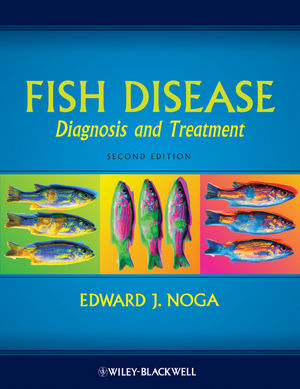
De: Edward J. Noga
ISBN: 9780813806976
2010, Wiley
Capa dura
Páginas: 536

Animais Exóticos, Selvagens, Silvestres, Aves, Peixes, Mamíferos Marinhos, Zoologia
De: Edward J. Noga
ISBN: 9780813806976
2010, Wiley
Capa dura
Páginas: 536
Fish Disease: Diagnosis and Treatment, Second Edition provides thorough, yet concise descriptions of viral, bacterial, fungal, parasitic and noninfectious diseases in an exhaustive number of fish species. Now in full color with over 500 images, the book is designed as a comprehensive guide to the identification and treatment of both common and rare problems encountered during the clinical work-up. Diseases are discussed following a systems-based approach to ensure a user-friendly and practical manual for identifying problems.
Fish Disease: Diagnosis and Treatment, Second Edition is the must-have reference for any aquaculturists, aquatic biologists, or fish health specialists dealing with diagnosing or treating fish diseases.
Preface to the First Edition ix
Preface to the Second Edition xi
Acknowledgments xiii
How to Use the Book xv
Part I Methods for Diagnosing Fish Diseases
1. Major Cultured Species 5
Aquarium (Pet) Fish 5
Bait Fish 7
Food Fish 7
Laboratory Fish 8
2. Types of Culture Systems 9
Closed Culture Systems: Aquaria 9
Closed Culture Systems: Ponds 10
Flow-Through Culture Systems 11
Semi-Open Culture Systems 12
3. The Clinical Workup 13
Equipping a Fish Disease Diagnostic Facility 13
Case Submissions 13
Water-Quality Analysis 16
Taking the History 17
The Physical Exam 17
Clinical Techniques: Routine Methods 20
Clinical Techniques: Specialized Methods 35
4. Postmortem Techniques 49
Euthanasia 49
Preserving Parasites 49
Culturing for Bacteria 49
Sampling for Water Molds and Fungi 55
Sampling for Viruses 55
Examining Tissues Postmortem 55
Zoonotic Diseases and Other Human Pathogens 63
5. Guidelines for Interpreting Clinical Findings 65
Environment, Stress, and Fish Disease 65
Acclimation 65
How to Use Part II, the Problem List 65
Sample Problem Data Sheet 66
Clinical Decision Making: Have the Major Problems Been Identified? 67
Prioritizing Problems 68
Treatment Plans 68
When to Refer Cases 68
6. Health Management 69
Biosecurity 69
Health Promotion and Maintenance 73
Animal Welfare 77
Food Safety 78
Environmental Safety 78
Part II Problem List
7. Problems 1 through 10: Diagnoses made with commercially available water-quality test kits or equipment that should be present in the clinician’s clinic 83
1. Environmental hypoxia 83
2. Temperature stress 88
3. Temperature stratification 90
4. Ammonia poisoning 91
5. Nitrite poisoning 96
6. Nitrate poisoning 98
7. Too low (too acidic) pH 100
8. Too high (too alkaline) pH 102
9. Improper hardness 103
10. Improper salinity 104
8. Problems 11 through 43: Diagnoses made by either gross external examination of fish, wet mounts of skin/gills, or histopathology of skin/ gills 107
11. Gas supersaturation 107
12. Lamprey infestation 109
13. Leech infestation 110
14. Copepod infestation/infection 112
15. Branchiuran infestation 119
16. Isopod infestation 121
17. Monogenean infestation 123
18. Turbellarian infection 129
19. Protozoan ectoparasites: general features 129
20. Ich infection 131
21. Marine white spot disease 135
22. Trichodinosis 137
23. Chilodonella infestation 138
24. Brooklynella infestation 139
25. Tetrahymenosis 140
26. Scuticociliatosis 141
27. Marine velvet disease 143
28. Freshwater velvet disease 147
29. Ichthyobodosis 148
30. Gill Cryptobia infestation 150
31. Gill amoebic infestation 150
32. Sessile, solitary, ectocommensal ciliate infestation 153
33. Sessile, colonial, ectocommensal ciliate infestation 155
34. Typical water mold infection 156
35. Epizootic ulcerative syndrome 162
36. Branchiomycosis 164
37. Columnaris infection 166
38. Bacterial cold water disease 169
39. Bacterial gill disease 170
40. Lymphocystis 171
41. Epitheliocystis 172
42. Miscellaneous skin and gill diseases 174
43. Incidental findings 176
9. Problem 44: Diagnoses made by examination of a gill clip or a blood smear 179
44. Primary hemopathies 179
10. Problems 45 through 57: Diagnoses made by bacterial culture of the kidney or affected organs 183
45. Bacterial dermatopathies/systemic bacterial infections: general features 183
46. Motile aeromonad infection 185
47. Aeromonas salmonicida infection 186
48. Enteric septicemia of catfish 190
49. Edwardsiella tarda infection 192
50. Vibriosis 193
51. Pasteurellosis 196
52. Enteric redmouth disease 197
53. Streptococcosis 199
54. Bacterial kidney disease 201
55. Mycobacteriosis 204
56. Piscirickettsiosis 208
57. Miscellaneous systemic bacterial infections 210
11. Problems 58 through 76: Diagnoses made by necropsy of the viscera and examination of wet mounts or histopathology of internal organs 215
58. Digenean trematode infection: general features 215
59. Digenean gill infection 220
60. Nematode infection 222
61. Cestode infection 226
62. Acanthocephalan infection 229
63. Myxozoan infection: general features 229
64. Proliferative gill disease 236
65. Ceratomyxa shasta infection 237
66. Hoferellus carassii infection 239
67. Proliferative kidney disease 239
68. Whirling disease 242
69. Miscellaneous important myxozoan infections 243
70. Microsporidian infection 247
71. Ichthyophonosis 253
72. True fungal infections 254
73. Diplomonad flagellate infection 257
74. Tissue coccidiosis 258
75. Miscellaneous endoparasitic infections 264
76. Idiopathic epidermal proliferation/neoplasia 264
12. Problems 77 through 88: Rule-out diagnoses 1 (viral infections): Presumptive diagnosis is based on the absence of other etiologies combined with a diagnostically appropriate history, clinical signs, and/or pathology. Definitive diagnosis is based on presumptive diagnosis combined with confirmation of viral presence (e.g., antibody probe, gene probe), 269
77. Systemic viral diseases: general features 269
78. Channel catfi sh virus disease 270
79. Infectious pancreatic necrosis and other aquatic birnaviruses 271
80. Infectious hematopoietic necrosis 274
81. Viral hemorrhagic septicemia 278
82. Infectious salmon anemia 282
83. Spring viremia of carp 285
84. Iridoviral diseases 287
85. Nodaviral diseases 289
86. Koi herpesvirus disease 292
87. Alphavirus diseases 294
88. Miscellaneous systemic viral diseases and infections 298
13. Problems 89 through 99: Rule-out diagnoses 2: Presumptive diagnosis is based on the absence of other etiologies combined with a diagnostically appropriate history, clinical signs, and/or pathology. Definitive diagnosis is based on presumptive evidence combined with further, more extensive workup with a specific identification of the problem 305
89. Nutritional deficiency 305
90. Hypercarbia 309
91. Hydrogen sulfide poisoning 309
92. Chlorine/chloramine poisoning 310
93. Metal poisoning 311
94. Cyanide poisoning 314
95. Miscellaneous water-borne poisonings 315
96. Harmful algal blooms, 321
97. Acute ulceration response/environmental shock/delayed mortality syndrome 325
98. Traumatic lesions 326
99. Genetic anomalies 330
14. Problems 100 through 102: Rule-out diagnoses 3: Presumptive diagnosis is based on the absence of other etiologies combined with a diagnostically appropriate history, clinical signs, and/or pathology. Definitive diagnosis is not possible since the etiology is unknown (idiopathic) 333
100. Lateral line depigmentation 333
101. Senescence 336
102. Miscellaneous important idiopathic diseases 336
15. Problem 103: Diagnoses made by examination of eggs 341
103. Egg diseases 341
Part III Methods for Treating Fish Diseases
16. General Concepts in Therapy 347
Treatment Guidelines 347
Routes of Drug Administration 358
Recommended Treatments in Various Culture Systems 371
Which Dosage to Use 373
17. Pharmacopoeia 375
Acetic Acid 376
Acriflavin 376
Activated Carbon 376
Agricultural Lime 376
Alum 376
Anesthetics 376
Antibiotics 377
Amoxycillin Trihydrate 378
Ampicillin Sodium 378
Chloramphenicol 378
Enrofloxacin 378
Erythromycin 379
Florfenicol 379
Flumequine 380
Furaltadone 380
Furazolidone 380
Kanamycin Sulfate 380
Nalidixic Acid 380
Neomycin Sulfate 381
Nifurpirinol 381
Nitrofurazone 381
Oxolinic Acid 381
Oxytetracycline 382
Sarafloxacin 383
Sulfadiazine-Trimethoprim 383
Sulfadimethoxine-Ormetoprim 384
Sulfadimidine-Trimethoprim 384
Sulfamerazine 384
Sulfamethoxazole-Trimethoprim 384
Antiseptics 384
Bayluscide® 385
Benzocaine 385
Biological Control 385
Bithionol 385
Bronopol 385
Buffers: Freshwater Aquaria 386
Buffers: Marine Aquaria 386
Buffers: Ponds 386
Butorphanol 387
Calcium 387
Carbon Dioxide 387
Chloramine Neutralizer 388
Chloramine-T 388
Chlorhexidine 389
Chloride 389
Chlorine 389
Chlorine Neutralizer 390
Chloroquine Diphosphate 390
Chorionic Gonadotropin 391
Clove Oil 391
Copper 391
Chelated Copper 391
Copper Sulfate 392
Deionized Water 393
Diflubenzuron 393
Dimetridazole 394
Diquat 394
Disinfection 394
Electroshock 396
Enamectin Benzoate 396
Eugenol 397
Euthanasia 397
Fenbendazole 398
Flubendazole 399
Formalin 399
Formalin/Malachite Green 400
Freshwater 400
Fumagillin 401
Gonadotropin Releasing Hormone 401
Hydrogen Peroxide 401
Hyposalinity 402
Hypothermia 403
Immunostimulants 403
Ivermectin 404
Ketamine 404
Ketoprofen 404
Levamisole Hydrochloride 404
Lidocaine 404
Magnesium Sulfate 404
Malachite Green 405
Mebendazole 406
Methylene Blue 406
Methyltestosterone 406
Metomidate 407
Metronidazole 407
Monensin Sodium 407
Nitrifying Bacteria 407
Organophosphate 408
Ozone 409
Peat 410
2-Phenoxyethanol 410
Piperazine Sulfate 410
Potassium Permanganate 410
Povidone Iodine 411
Praziquantel 412
Pyrethroid 413
Quaternary Ammonium Compounds 413
Quinaldine Sulfate 414
Salt 414
Secnidazole 415
Sedatives 415
Silver Sulfadiazine 415
Slaked Lime 415
Sodium Bicarbonate 416
Sodium Pentobarbital 416
Sodium Phosphate 417
Sodium Sulfi te 417
Teflubenzuron 417
TFM 417
Toltrazuril 417
Tonic Immobility 417
Tricaine 417
Triclabendazole 418
Ultraviolet Light 418
Unslaked Lime 419
Vaccines 419
Virkon® Aquatic 419
Water Change 419
Wound Sealant 420
Zeolite 420
Literature Cited 421
Appendix I Fish Disease Diagnosis Form 471
Appendix II Suppliers 473
Appendix III Scientific Names of Fish Mentioned in the Text 481
Appendix IV Definitions of Terms 491
Appendix V Example Form for Shipping Fish to a Clinic or Diagnostic Laboratory 495
Index 497
Edward J. Noga, MS, DVM
Is Professor of Aquatic Medicine (College of Veterinary Medicine) and Adjunct Professor of Zoology (College of Agriculture and Life Science) at North Carolina State University, in Raleigh, North Carolina, and Adjunct Professor of Marine Science (Center for Marine Science) at the University of North Carolina in Wilmington, North Carolina.