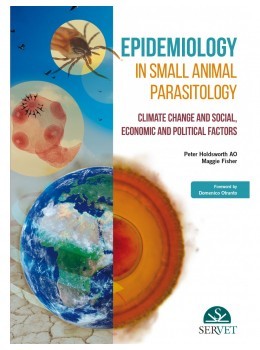
• This book provides an understanding of climate change and other contributing factors in the emergence/reemergence of parasitic diseases in companion animal. It describes the known changes in the epidemiology of key parasite infections and highlights zoonotic threats, and is therefore a valuable resource for veterinary practitioners to manage risks and keep abreast of emerging/reemerging parasitic diseases of pets.

  • 1. Introduction

    2. Epidemiology and an overview of its influencers

    Quality of date
    Disease occurrence and determinants
    Transmission and maintenance of infection
    Climate change and disease ecology
    Risk and its prediction and mitigation
    Monitoring the effect of change and treatment
    Effect of treatment and prevention on the establishment of infection and disease

    3. Climate change: predictions and actual effects on parasite populations

    Methods of prediction
    Vector-borne parasites
    Ectoparasites
    Endoparasites

    4. Impacts of animal movement and climate change

    Leishmaniosis and its spread in southern Europe
    Tick life cycle through Siberian chipmunks in France
    Echinococcus multilocularis spread in Europe since rabies elimination
    Baylisascaris in raccoons in Germany
    Leishmania in dogs in the United States

    5. Social, political and economic upheaval

    Central Asian countries and the Soviet Union collapse
    Syrian military and civil conflict
    Greek financial crisis

    6. Urban sprawl and implications on peri-urban areas

    Animal road kill epidemiology
    Land conservation corridors
    Wildlife infiltration

    7. Governmental programmes to tackle animal movement

    Quarantine approaches
    UK pet passport scheme
    EU pet movement scheme

    8. Pet owners and public attitudes

    Societal attitude to therapeutics – political, economic and individual choices

    9. Implications of human and good movements

    Tiger mosquito incursion in the EU

    10. Implications for veterinarians

    Identification
    Management
    Strategic planning
    Obtaining treatments
    Education of pet owners
    Influencing public strategy
  • Peter Holdsworth

    Peter Holdsworth is an independent consultant to the global animal health industry. He holds a PhD in veterinary parasitology from the University of Queensland (Australia) and has published over 60 peer-reviewed scientific papers, reports, books and book chapters. Peter is a fellow of the British Royal Society of Biology and of the Australian Institute of Company Directors.

    Peter was president of the Australian Society for Parasitology (2008-2009) and the World Association for the Advancement of Veterinary Parasitology (WAAVP) (2011–2015) as well as a board member of the International Federation for Animal Health (2005–2013). He was also a member of the VICH (Veterinary International Conference on Harmonization) Steering Committee and of their veterinary anthelmintic testing guidelines working group (1998–2013). He was a member of the Australian delegation to the Codex Committee on Residues of Veterinary Drugs in Foods (1998–2013) and of the Ad hoc Codex Intergovernmental Task Force on Antimicrobial Resistance, where his work focused on establishing risk management procedures for dealing with antimicrobial resistance in relation to the use of veterinary antimicrobials (2005–2008).

    Maggie Fisher

    Maggie Fisher is a graduate of the Royal Veterinary College (RVC, London, United Kingdom). She also holds a BVetMed from the University of London, is a diplomate of the European Veterinary Parasitology College and fellow of the British Royal Society of Biology. She has lectured in veterinary parasitology at the RVC and Nottingham University and in equine science at Hartpury College. Maggie is now a professional director, business owner and consultant within the global veterinary parasitology arena.

    Maggie was an instigator (2006) and inaugural director of the European Scientific Council Companion Animal Parasites (2008–2014). She is at present an executive committee member of the World Association for the Advancement of Veterinary Parasitology (WAAVP) along with the chair of the WAAVP guideline sub-committee. She is member of the Association of Veterinary Consultants and now owns and directs the hands-on operation of three United Kingdom registered businesses: Shernacre Enterprise Limited (SEL), a platform to deliver independent consultancy and clinical research in veterinary parasitology; Ridgeway Research Limited (RRL), a contract research organisation; and Veterinary Research Limited (VRM), a specialist veterinary research management company.

info